Somebody’s Feral Nurse Embroidery File Review
When you’re considering a new embroidery file for client projects or your own shop, it’s not just about the design on screen—it’s about imagining how it will look and feel once stitched onto fabric. Today, I’m looking at Somebody’s Feral Nurse SVG Cutting File from that practical, in-the-hoop perspective.
The First Impressions: A Design with Personality
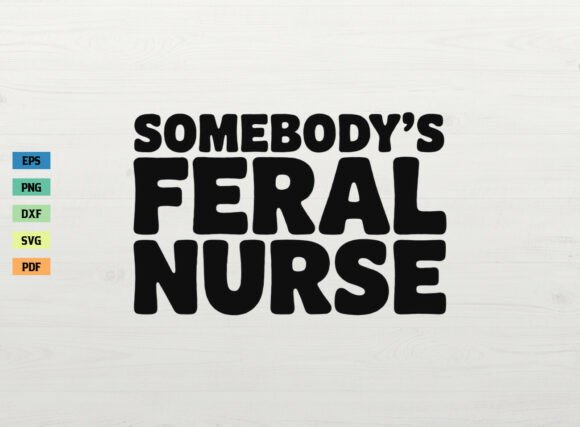
Opening Somebody’s Feral Nurse SVG Cutting File, the immediate vibe is playful and slightly irreverent. The artwork has a distinct character that stands out. For embroidery, this translates into a design that isn’t just decorative; it tells a little story. The shapes are bold, and the layout is straightforward, which is a good starting point. You want a design that can hold its own without needing overly complex stitching. This one feels like it belongs on items meant to be noticed—a statement sweatshirt, a bold tote bag, or a cheeky apron for someone with a sense of humor.
Where This Design Finds Its Best Home
Let’s picture a real scenario. A client requests a custom embroidered tote bag as a gift for a nurse friend who has a tough-as-nails personality. You load Somebody’s Feral Nurse, and the idea clicks. The design’s theme is niche but resonant, perfect for personalized gifts. I’d also naturally consider it for boutique merchandise, like embroidered caps or pillow covers in a small shop catering to medical professionals or fans of quirky humor. The clean, graphic nature of the file means it scales well, suitable for both larger centerpieces on a sweatshirt and smaller accents on a baby onesie (for that cool nurse parent, of course).
Performance in Real Embroidery Projects
Moving from theory to practice, how does Somebody’s Feral Nurse SVG Cutting File perform when you actually run the machine? The provided formats—SVG, DXF, PNG, EPS, PDF—give you flexibility. For embroidery, the vector files are key for clean scaling before converting to your machine’s format.
On medium-weight fabrics like cotton tees or canvas tote bags, this design should stitch out with clarity. The bold lines and likely fill areas mean stitch density will be important to manage to avoid puckering, especially on stretchier fabrics like sweatshirt fleece. For a project like an embroidered patch, the graphic style would lend itself well to a dense satin stitch border, making it a sturdy, stand-alone item.
Consider the visual appeal after stitching. Because the design isn’t overly detailed with tiny elements, the final handmade product should look crisp and professional, boosting customer trust and the perceived value of your work. For an Etsy seller, this clarity is vital—it makes for great photos in your listings and printable mockups.
Careful Application: Where to Proceed with Caution
Every design has its ideal applications and its trickier ones. For Somebody’s Feral Nurse, I’d be cautious on very small hoop sizes. If you’re trying to miniaturize it for a delicate baby garment corner, some of the character might get lost. Similarly, on textured fabrics like some towels or thick blankets, fine details can blend in. Dark fabric backgrounds require thoughtful thread color contrast planning—you might need to test a few colorways to ensure the design pops.
Embroidering on curved surfaces like caps can be challenging for any design. Here, because the layout isn’t excessively wide, it could work well on a cap front, but you’d need a good stabilizer and to check the design orientation in your software first. The main point: this isn’t a design you’d slap onto any product blindly. It has a specific mood that matches certain products, and the technical setup must respect the fabric.
The Impact on Your Craft Business
Using a design like Somebody’s Feral Nurse in your craft business goes beyond a single stitch-out. It affects your brand consistency. If your shop specializes in witty, professional-themed gifts, this fits seamlessly, enhancing your niche. As a personalized gift, it has high giftability—it feels unique and thoughtful.
For commercial embroidery projects, perhaps for a local clinic’s staff appreciation event, it offers ready-made, professional artwork. That saves you design time and provides a reliable digital embroidery file asset. The key, always, is to confirm licensing before selling finished items. The description states the files are perfect for shirt printing, which suggests usability for physical products, but you must verify the terms for commercial use.
Practical Designer Notes Before You Hoop
Here’s my routine for a file like this, and I recommend you adopt similar habits:
- Test on scrap fabric first. Use the same material as your final project. See how the fill stitches behave.
- Check thread color contrast. Run a simple black-and-white mockup in your software. How does it look on light vs. dark backgrounds?
- Review the design’s small details. Are there any corners or potential tiny lettering that might need stitch type adjustment?
- Confirm your intended hoop size works. Scale the design in your software and look for any overly dense areas.
- Use proper stabilizer. This is non-negotiable for a clean finish, especially on apparel.
- Consider both personal and commercial projects. Understand where you can and cannot use the design to protect your business.
These steps turn a digital download into a successful, real-world embroidery project. They help you avoid wasted time, materials, and client disappointment.
Final Thoughts on a Quirky, Useful File
Somebody’s Feral Nurse SVG Cutting File is a graphic with a clear personality. It’s not a generic floral motif; it’s a conversation starter. In the hands of a maker who understands its niche, it can become a standout embroidered patch, a beloved custom apparel item, or a bestselling product in a small shop. Its strength lies in its bold, graphic nature, which translates well into physical stitching.
Approach it with a practical eye: match it to the right products, prepare your machine with care, and always do your due diligence on licensing. When you do, it becomes more than a digital product—it becomes a tangible piece of your craft, something with a story that your customer will wear, use, and appreciate. That’s the real goal of any embroidery design, and this one has the potential to meet it beautifully.